Echoes Across Silence: A Different Kind of Autism Research Comes from Japan
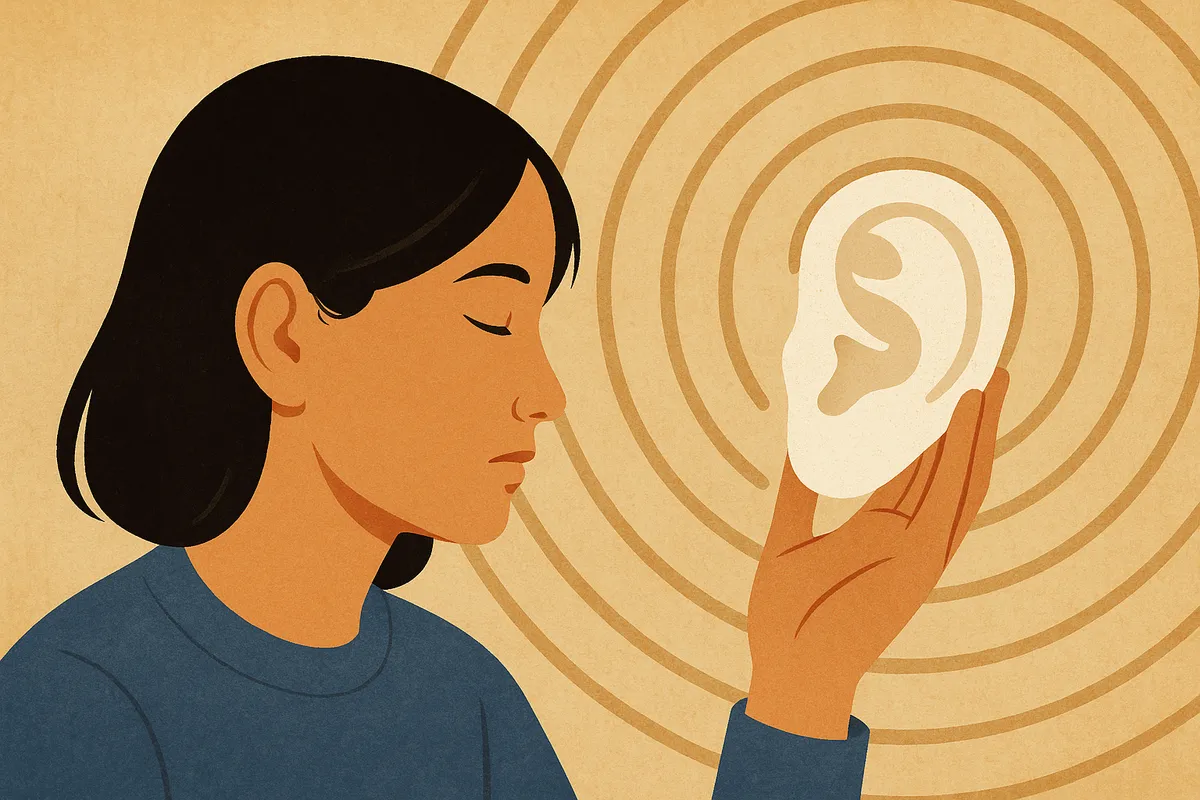 Paper Teaches Autism Researchers How to Hear
This paper hums differently. Harada et al. (2025) enter the Japanese autism research landscape carrying seven voices that have waited decades to be heard. Published in Autism and anchored by a cross‑neurotype team — Harada, Pellicano, Kumagaya, Asada, Senju and Satsuki Ayaya — it begins not with theory but with breath. Ayaya’s presence shapes the team’s understanding of authority without needing to be spelled out yet; her influence threads through the work. The paper listens rather than measures and succeeds because it lets its participants breathe inside their own sentences.
The title quotes a participant’s line, raw and exhausted: “I don’t think they understand the reality of autism.” That sentence hangs over the text like weather. Every paragraph circles back to it, showing what happens when misunderstanding becomes infrastructure. The team gathered late‑diagnosed Japanese adults who had lived long years of being told to adapt, hide or disappear. Each account adds a note to the same chord — loneliness dressed as normalcy.
Learning to Hear
The method is simple: seven semi‑structured interviews, reflexive thematic analysis and an explicit statement of the authors’ own neurotype and research roles. Ayaya’s name sits mid‑author list but her influence runs through the whole frame. She recruited, co‑analyzed and held the project to the ethic of Tōjisha‑Kenkyū — peer‑led inquiry built on the premise “I do not fully know myself.” It’s that humility that keeps this study alive. Harada’s text does not use autistic testimony as evidence; it treats it as knowledge.
The findings are carved into four themes: difference, diagnosis, mixed emotion and the demand for acceptance. Beneath them runs a quieter fifth — survival by translation. The participants describe being told to act “normal,” to suppress their language and sensory rhythm. The harm is not in cruelty alone but in constant correction. Schoolmates locked one boy on a balcony. A woman’s family refused her diagnosis because she had been a good student. Even success became a form of disobedience. The cultural law of harmony demanded silence and silence demanded masks.
The Grammar of Conformity
Japanese collectivism sits in this paper not as backdrop but as force. The expectation to read the air — to infer rather than say — turns every conversation into an exam few can pass. Autistic difference, already hyper‑visible, becomes an error in social translation. Harada’s participants name the exhaustion of constantly decoding invisible rules. They also name the cost: burnout, withdrawal, illness. Some fall into hikikomori isolation. Others move abroad and feel their first ease simply because no one cares if they eat alone.
This is more than cultural anthropology. It’s a diagram of epistemic injustice drawn through lived time. “Pretend to be normal and work as a normal person,” one doctor instructs. The repetition of “normal” is its own violence. The study captures that repetition without spectacle, letting the words sit heavy. No cure talk, no deficit metrics — just the architecture of misunderstanding.
Co‑production or Co‑option?
Harada et al. position their collaboration as co‑production. And to a point it is. Ayaya’s practice of Tōjisha‑Kenkyū shapes the project’s moral core, ensuring that community knowledge drives academic inquiry. Yet the authorship order tells another story. The non‑autistic majority still holds the gate keys: first and senior authorship, institutional affiliations and the language of publication itself. The English prose is careful, disciplined and at times muffled. The intimacy of Japanese speech doesn’t survive the translation intact. Still, within those limits, the work resists extraction. It is the sound of academia trying, however imperfectly, to learn reciprocity.
What makes it powerful is the refusal to slide into pity. The authors document pain but center agency. Participants are not case studies; they are narrators theorizing their own lives. Harada’s team cites Oliver’s social model and the neurodiversity paradigm but treats them as tools not gospel. This is not a Western import pasted onto Tokyo — it’s a remix, an adaptation that keeps local cadence.
The Weight of Work
Employment threads through the paper like gravity. Each participant meets the same wall: workplaces that demand invisibility. One is told to conceal his diagnosis to avoid frightening coworkers. Another’s request for reasonable accommodation is denied despite a new anti‑discrimination law. A third finds that disability hiring schemes prefer those who can “integrate.” These stories show how legal inclusion can coexist with social exile. Work, in this context, becomes ritual obedience, not livelihood.
Yet the interviews also reveal stubborn imagination. People build micro‑spaces of survival: home freelancing, art, quiet study, the dream of a safe zone. They speak of turning their knowledge outward, teaching others what real inclusion sounds like. The desire is not for therapy — it’s for understanding.
Translation as Ethics
The paper’s most radical gesture is its self‑awareness. Harada’s team writes that Western research has long ignored non‑Western lives and that translation is itself an ethical act. They name their own limits: small sample, dated interviews, English mediation. Instead of apologizing they use those limits as evidence of the structural imbalance they are critiquing. It’s a neat loop — form mirroring content.
Through Ayaya’s presence the study folds back into Tōjisha‑Kenkyū. Where her solo work theorized epistemic injustice, Harada et al. put it in motion. The bridge is visible: from grassroots self‑research circles in Hokkaido to peer‑reviewed pages in an international journal. The crossing is uneven but real.
What Remains Unsaid
Even here there’s residue. The prose carries the politeness of academic English, smoothing the edges of anger that likely burned in the Japanese transcripts. That softening is the cost of publication. The participants’ words pass through translation, editing and citation before reaching us. Each layer dulls a little more urgency. The system still asks for civility in exchange for visibility.
But beneath the surface calm this paper is insurgent. It turns testimony into critique and critique into blueprint. It exposes the scaffolding of ableism within Japanese social order and by extension within research itself. It asks not just for empathy but for structural humility — the willingness of scholars to admit they don’t yet know how to listen.
Toward a Shared Language
Read beside another of Ayaya’s papers — Tōjisha‑Kenkyū on Autism in Japan — this article forms the other half of a conversation. Ayaya writes the theory; Harada et al. test it in the field. Together they sketch a model for ethical cross‑neurotype research: bilingual, reciprocal, unhurried. They don’t just describe autism — they build the conditions where autistic people can describe themselves.
What lingers after reading is not the data but the cadence of reclamation. “I don’t think they understand the reality of autism,” one participant said. Harada et al. answered — not by explaining autism to Japan but by letting Japan hear autism speak for itself.