Autism Research Keeps Blaming Moms
 This Time, Lactation Becomes a Morality Test
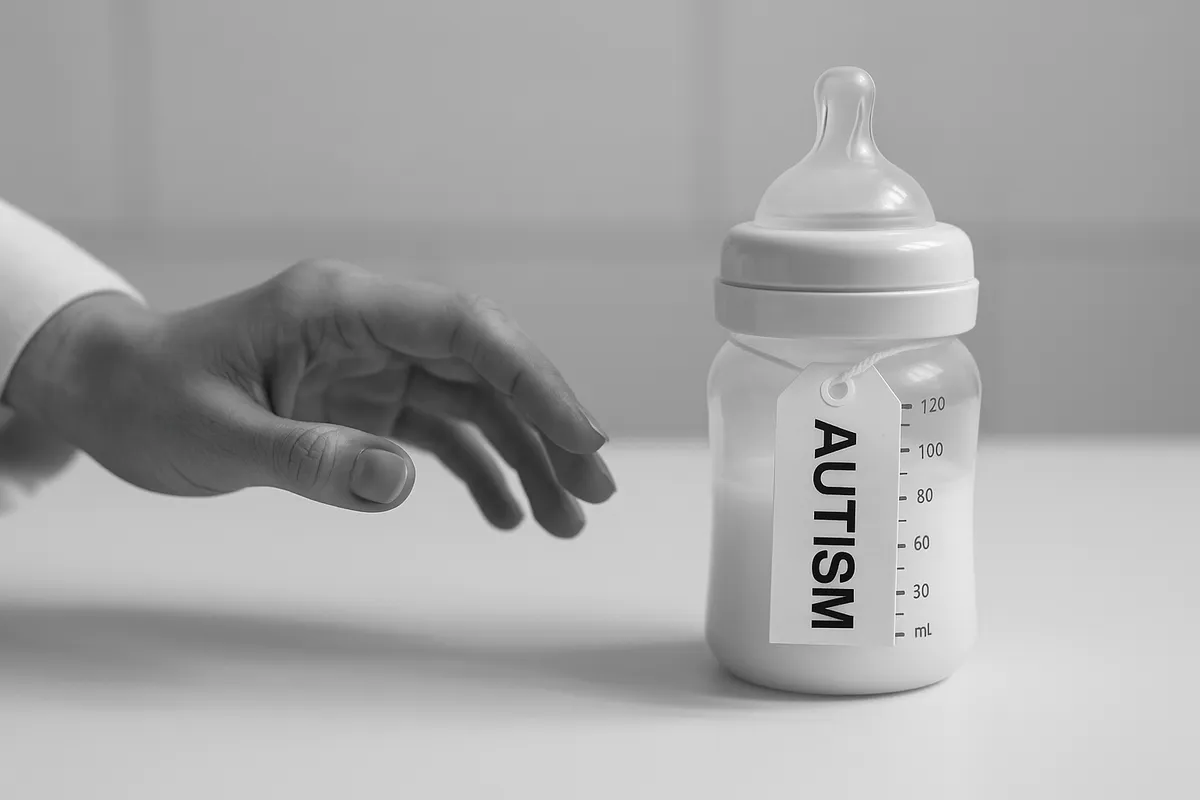
A familiar rhythm tends to resonate from autism papers. A researcher notices that autistic children were, on average, breastfed less often. Then comes the “association” headline followed by the regression table, each one mplying the same unspoken conclusion: maybe, if mothers breastfed longer, fewer kids would be autistic.
That is not science speaking. That is culture humming through the data.
This latest version, out of Saudi Arabia, gathered online questionnaires from mothers of autistic and non-autistic children. It found what similar studies always find: less reported breastfeeding among the autistic group. The authors call it a “dose-response relationship.” They briefly acknowledge the possibility of reverse causality: that early feeding differences may reflect the child’s neurology, not the mother’s effort. But that line is treated like a footnote instead of the story.
Because the frame never changes.
Autism is still presented as a thing that happens to families. It is a risk, a burden, a cost. Mothers are still positioned as the first line of prevention, and every deviation from “exclusive breastfeeding” becomes a moral data point.
The Cultural Script Behind the Regression
The harm here isn’t in gathering data. It’s in how the findings are interpreted and framed as moral evidence rather than human variation.
Public health research often talks about “modifiable risk factors.” It sounds neutral until you notice who keeps getting modified. Not the healthcare systems that underdiagnose girls. Not the workplaces that make early feeding impossible. Not the diagnostic categories that pathologize difference. Mothers.
When autism is treated as the endpoint of maternal behavior, the entire conversation shifts from neurodiversity to compliance. It stops asking how autistic infants experience feeding and starts asking how mothers might have done it better.
What’s Really Being Measured
Let’s name what these surveys can’t capture:
- early motor and sensory differences that make latching painful or confusing for the infant
- maternal stress shaped by stigma or lack of support
- cultural expectations that sanctify breastfeeding while penalizing deviation
All of that complexity is collapsed into a single binary, breastfed or not, then reinterpreted as evidence of maternal failure.
The authors call for “ASC prevention strategies.” That phrase speaks volumes about this study's framing. But autism isn’t a disease with an exposure pathway; it’s a neurotype. To treat it as preventable is to re-open the old eugenic question through a nutritional side door.
What Could Have Been Asked Instead
If the goal were care, not correction, the study could have explored feeding experiences among autistic infants and parents. It could have asked what support actually helps or what sensory adaptations matter. It could have treated feeding difficulty as communication, not risk. That would have been research with autistic life at the center, not autism as an outcome to be avoided.
The Reframe
Autistic difference doesn’t start where breastfeeding ends. It starts at birth and it deserves curiosity without accusation. Every time science repeats the “less mothering (in this case breastfeeding) = more autism” story, it reinforces the same moral reflex: blame the mother, spare the system's illusion of objectivity.
Maybe the real question isn’t who breastfed enough. Maybe it’s why we keep designing studies that make mothers answer for our cultural discomfort with neurodiversity.